Solitaire - Classic Card Games
- 4.5
- Rating
- 50.00M
- Installs
- Free
- Price
 Analysis by App-foxy
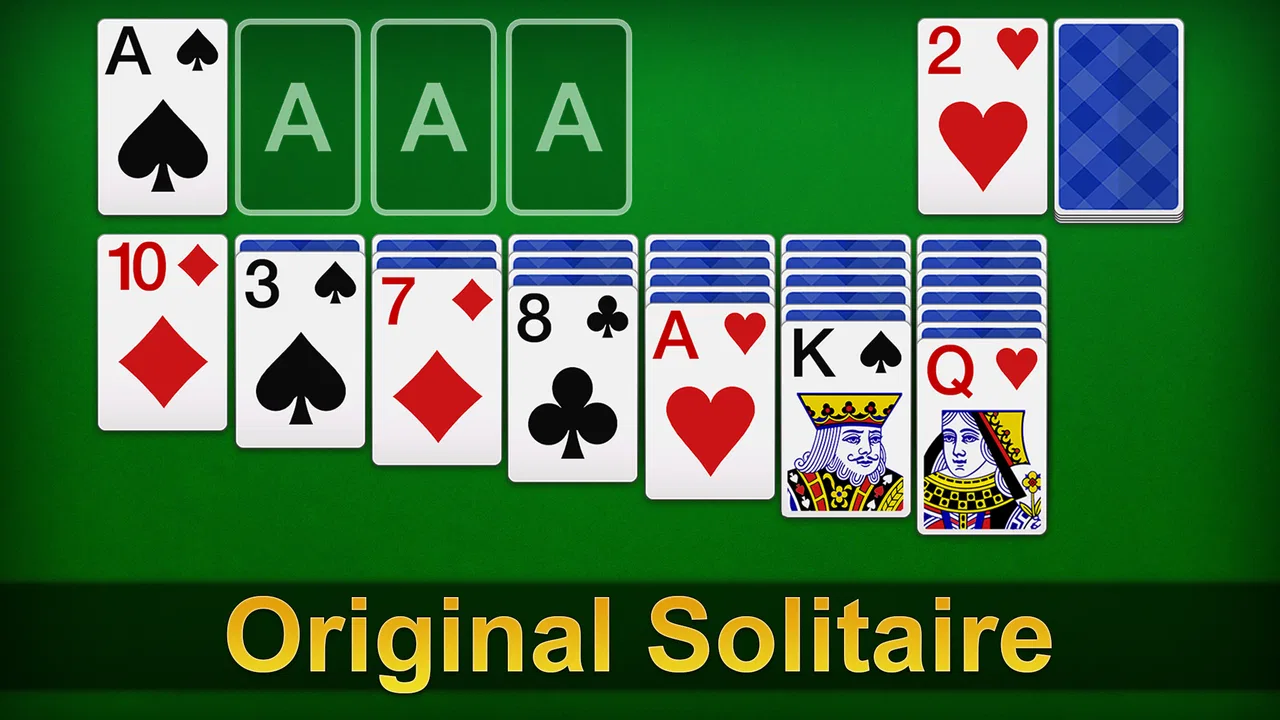
I keep coming back to simple card games when I want something quiet rather than competitive, and Solitaire - Classic Card Games fits that mood well. It is a free solitaire game from nerByte GmbH, aimed at the familiar single-player experience: open a deal, look for useful moves, and clear the tableau at your own pace. I found it easy to start for a few minutes, but also comfortable enough for a longer, unhurried session.
That simplicity is the main reason to try it. You do not need to learn a new card system, build a team, or wait for another player. The appeal is in making the next sensible move and gradually improving your awareness of hidden cards. Still, this is not the right choice for everyone. Players who want deep strategy, multiplayer competition, or a large collection of radically different card games may outgrow it quickly.
How the current version feels in everyday use
The game belongs squarely in the card category, and its store summary presents it as a relaxing way to train your brain. In practice, I would describe it less as a serious training tool and more as a gentle concentration exercise. It asks you to notice sequences, preserve useful spaces, and avoid wasting a move too early. That is enough mental involvement to keep a short break interesting without making the experience tiring.
You May Also Like

 AccuWeather: Weather Radar
AccuWeather Review: A Quick, Clear Forecast for Everyday Decisions
For everyday plans, the best forecast is the one you can understand quickly. AccuWeather makes rain timing, radar, and local conditions easy to act on, with a few trade-offs.

 Hill Climb Racing
Why Hill Climb Racing Still Turns Crashes Into One More Run
A tiny car, a bumpy hill and one more upgrade: Hill Climb Racing keeps resurfacing because its simple chaos makes every near-miss feel personal.

 AliExpress - Shopping App
AliExpress Makes Global Shopping Feel Personal, but Shoppers Bear the Risk
AliExpress turns a global marketplace into a pocket-sized discovery engine. Its reach is useful, its shopping loop compelling, and its trade-offs easy to miss.

 Lords Mobile: Kingdom Wars
Lords Mobile Is a Kingdom-Building Routine, Not a Quick Match
A case-by-case verdict on the building, battles, device demands, and social commitments that make Lords Mobile rewarding for some players and exhausting for others.

 PDF Scanner app - TapScanner
TapScanner Makes Paperwork Easier to Capture, Check, and Share
TapScanner makes scanning with a phone feel less like a rescue operation and more like a dependable step in getting work done. Its capture tools are useful, though not flawless.

 Block Blast!
 Shows How Much a Puzzle Game Can Leave Out
A quiet grid game shows why puzzle players increasingly value instant clarity, repeatable skill and low-pressure play—and where the genre still needs to catch up.
More From Our News Desk
View All News


A typical session works especially well in small gaps during the day. I can imagine opening it while waiting for an appointment, taking a quiet break from work, or winding down before sleep. Because a round is self-contained, I do not need to arrange a time with anyone else or remember a complicated campaign. The game is also rated for Everyone, which makes its straightforward card format approachable for a broad audience.
The free entry point matters here. Solitaire is a familiar pastime, so paying before deciding whether the presentation suits me would feel unnecessary. The free version gives the game a low-risk starting point, while in-app purchases are listed at $9.49 per item. That makes it worth checking the purchase prompts carefully if you prefer a completely uninterrupted free experience. I would not spend automatically; I would first decide whether the available presentation and play rhythm offer something beyond the standard card app already on my phone.
One practical strength is that the game does not demand a large commitment from the player. I can stop after a single deal without feeling that I have abandoned a story or lost progress in a larger system. That makes it a better fit for casual routines than many modern games, which often use daily tasks, energy limits, or long upgrade paths to keep attention. Here, the value is concentrated in the individual round.
What the familiar format does well
The classic solitaire structure rewards planning without requiring specialist knowledge. I usually begin by checking moves that reveal a hidden card, but I try not to treat every possible move as equally valuable. An open column can be more useful than an immediately available stack, and moving a card simply because it can move may leave the tableau less flexible later. That small distinction is where the game becomes more thoughtful than a purely automatic time-killer.
My most useful habit is to pause before emptying a column. An empty space can be valuable, but only when I have a suitable king or a clear plan for using it. Filling that space too quickly can reduce future options. This is the kind of quiet trade-off that makes a standard solitaire deal feel rewarding when it works out, even though the rules themselves are easy to understand.
I also prefer treating the undo option, when available in the play flow, as a learning tool rather than a way to erase every consequence. Replaying the last decision helps me see whether I moved a sequence too early or exposed the wrong card. Used that way, a failed deal can still teach something. Used constantly, undo can remove the tension that gives solitaire its character.
How it compares with ordinary alternatives
Compared with a physical deck, this version is faster to set up and easier to use in a small space. The trade-off is tactile: I do not get the satisfying feel of handling cards, and the screen cannot replace the relaxed ritual of laying out a table. A physical deck is better when I want a break from screens; this game is better when I want the rules to manage the setup and cleanup for me.
Compared with a more feature-heavy solitaire collection, this title is likely to appeal to someone who values an uncomplicated route into a deal. A larger collection may be preferable if variety is the main goal, especially for players who quickly tire of one classic format. On the other hand, extra modes can make a simple pastime feel crowded. I would choose this game when I want the card layout itself to remain the focus rather than a long menu of distractions.
It also differs from competitive card games in an important way: there is no need to measure my performance against another person during the round. That makes it calmer, but also less motivating for players who need rankings, head-to-head pressure, or social interaction. If your ideal card game includes bluffing, deck construction, or opponents who react to your decisions, this solitaire experience will feel intentionally limited.
What the version history tells existing players
The current version is listed as 3.9.9.9.9.9.4, while the game was released on November 24, 2020. Those details place it in a mature stage rather than at the beginning of its life. I would approach that positively: a long-running solitaire app has had time to settle into its basic purpose, and the current release suggests ongoing maintenance rather than a one-off experiment.
At the same time, a version number by itself does not tell me that the game has been transformed. I would not expect a mature classic-card app to suddenly become a new genre. The sensible expectation is refinement around the existing experience: keeping the core deal playable, maintaining compatibility, and smoothing the parts that matter during repeated short sessions. That is useful for existing users because stability and familiarity are often more valuable here than dramatic redesigns.
The broad adoption figures support that impression. The game has passed 10 million installs, with an average rating of 4.6 from around 418 thousand ratings and about 12 thousand written reviews. I read those numbers as evidence that the basic proposition works for many people, not as proof that every player will enjoy it. Solitaire has unusually personal preferences: one person wants a bare layout, another wants more customization, and a third cares most about hints or statistics.
For someone already using an older release, the main benefit of moving to the current version is likely continuity with a maintained product rather than a completely different game. I would update when the new release is available through the normal store process and when the current device supports it, but I would not expect the update alone to change how I play. The minimum operating system is Android 6.0, so owners of older Android hardware should check compatibility before planning around it.
Small decisions that improve the experience
My first tip is to use a short “scan before move” routine. I look for moves that expose face-down cards, identify any sequences that could be shifted together, and check whether an empty column would actually help. This takes only a moment, yet it prevents the most common casual mistake: making the first visible move instead of the most useful one.
Second, I use the game as a reset between demanding tasks rather than as background noise. A five-minute deal gives my attention one contained problem, which feels different from scrolling through an endless feed. I stop when the round ends instead of turning the break into another long session. That makes the relaxing side of the game more believable in daily use.
Third, I would keep expectations realistic about “brain training.” The game can exercise attention, sequencing, and decision-making in a narrow card context, but I would not treat it as a complete mental-fitness program. Its strongest benefit is that it gives me a pleasant reason to focus for a while. If I want structured lessons, measurable cognitive exercises, or broad skill development, I would choose a dedicated learning app instead.
A fourth useful approach is to separate unlucky deals from poor play. Solitaire can produce positions where the available choices are limited, and frustration can make me rush the next round. When a deal becomes awkward, I review the last few decisions and then move on rather than assuming every loss was a personal failure. This keeps the game relaxing and avoids turning a casual card round into a needless test of patience.
Where the experience may fall short
The biggest limitation is also the defining feature: the game is built around one familiar kind of pastime. If I play it every day for long periods, the basic loop may begin to feel repetitive. The calm rhythm is excellent for short sessions, but it does not offer the constant novelty of a puzzle game with changing objectives or a collectible card game with new strategies.
The free model may also create friction for people who dislike any commercial interruptions or purchase invitations. Since individual in-app items are priced at $9.49, I would pay attention before confirming anything. The price may be reasonable for a player who uses the game regularly and values the associated item, but it is harder to justify for someone who only opens solitaire occasionally.
Another trade-off is the absence of social tension. I enjoy not having to compete, but some readers will find the lack of opponents, shared tables, or direct challenge too quiet. This is a solo card companion, not a substitute for a multiplayer card night. Choosing it means choosing control over pace and privacy over interaction.
I would also skip it if my priority is a highly customized card table or an extensive catalogue of variants. The familiar format is approachable precisely because it does not ask much of me. Players who want to tune every rule, chase complex objectives, or move between many distinct games should compare it with a broader solitaire suite before settling here.
Who should install it and what to watch
I recommend giving it a try if you want a free, low-pressure card game for short breaks, quiet evenings, or moments when you need a simple focus. It is particularly suitable for someone returning to solitaire after a long time because the rules are recognizable and the learning curve is gentle. The Everyone rating reinforces that accessible positioning.
I would be more cautious if you are choosing mainly because of the “brain training” idea. Think of the mental benefit as a side effect of playing thoughtfully, not as a replacement for a structured program. I would also look elsewhere if competition, social play, or constant variety is what keeps you engaged.
For existing users, I would watch future releases for practical improvements that protect the calm flow: clearer interaction, dependable compatibility, and less friction between opening the app and starting a deal. Those changes would matter more to me than flashy additions. In a mature solitaire game, the best evolution is often the kind I notice only because the round feels easier to begin and easier to finish.
Overall, Solitaire - Classic Card Games succeeds by staying focused. nerByte GmbH has built a widely used card game around a format that remains easy to understand and satisfying in small doses. I like it as a quiet companion rather than a main gaming hobby. If you want a familiar solitaire round without the commitment of a larger game, this is a sensible free starting point. Just keep the limits in mind: its charm comes from repetition, its strategy stays within classic solitaire boundaries, and the in-app purchase model deserves a deliberate look before spending.
FAQs for Solitaire - Classic Card Games
01What features does Solitaire - Classic Card Games offer?
Solitaire - Classic Card Games offers a variety of classic solitaire modes, including Klondike, Spider, and FreeCell. The app includes customizable themes, daily challenges, and an intuitive interface. It also features a hint system, undo options, and score tracking to enhance your gameplay experience. The app is designed to be both relaxing and mentally stimulating.
02Is Solitaire - Classic Card Games free to download and play?
Yes, Solitaire - Classic Card Games is free to download and play. However, it may include in-app purchases or ads to support development. These can typically be removed with a one-time purchase. The game provides a premium user experience without requiring any payments, but additional features or ad removal might require a purchase.
03Can I play Solitaire - Classic Card Games offline?
Absolutely! Solitaire - Classic Card Games can be played offline, making it perfect for users who want to enjoy a quick game without needing an internet connection. This feature ensures that you can play anytime, anywhere, whether you’re commuting or simply in an area with limited connectivity.
04Does Solitaire - Classic Card Games offer customization options?
Yes, the app allows a variety of customization options to enhance your playing experience. Players can choose from different themes, card backs, and backgrounds. This personalization feature lets you tailor the game’s appearance to your liking, ensuring a unique and enjoyable solitaire experience.
05How user-friendly is Solitaire - Classic Card Games for beginners?
Solitaire - Classic Card Games is designed with user-friendliness in mind, making it suitable for beginners. The app offers a simple, intuitive interface with easy-to-follow instructions. Hints and undo options are available to help new players learn the game. Its straightforward design makes it accessible for players of all skill levels.
Pros
- Smooth and intuitive gameplay experience.
- Attractive and customizable card designs.
- Daily challenges keep the game engaging.
- Offline mode available for on-the-go play.
- Minimal ads for uninterrupted enjoyment.
Cons
- Lacks multiplayer or social features.
- Limited hints can frustrate new players.
- In-app purchases for themes and decks.
- Occasional lag on older devices.
- No cloud save to sync across devices.

Solitaire - Classic Card Games
Gallery